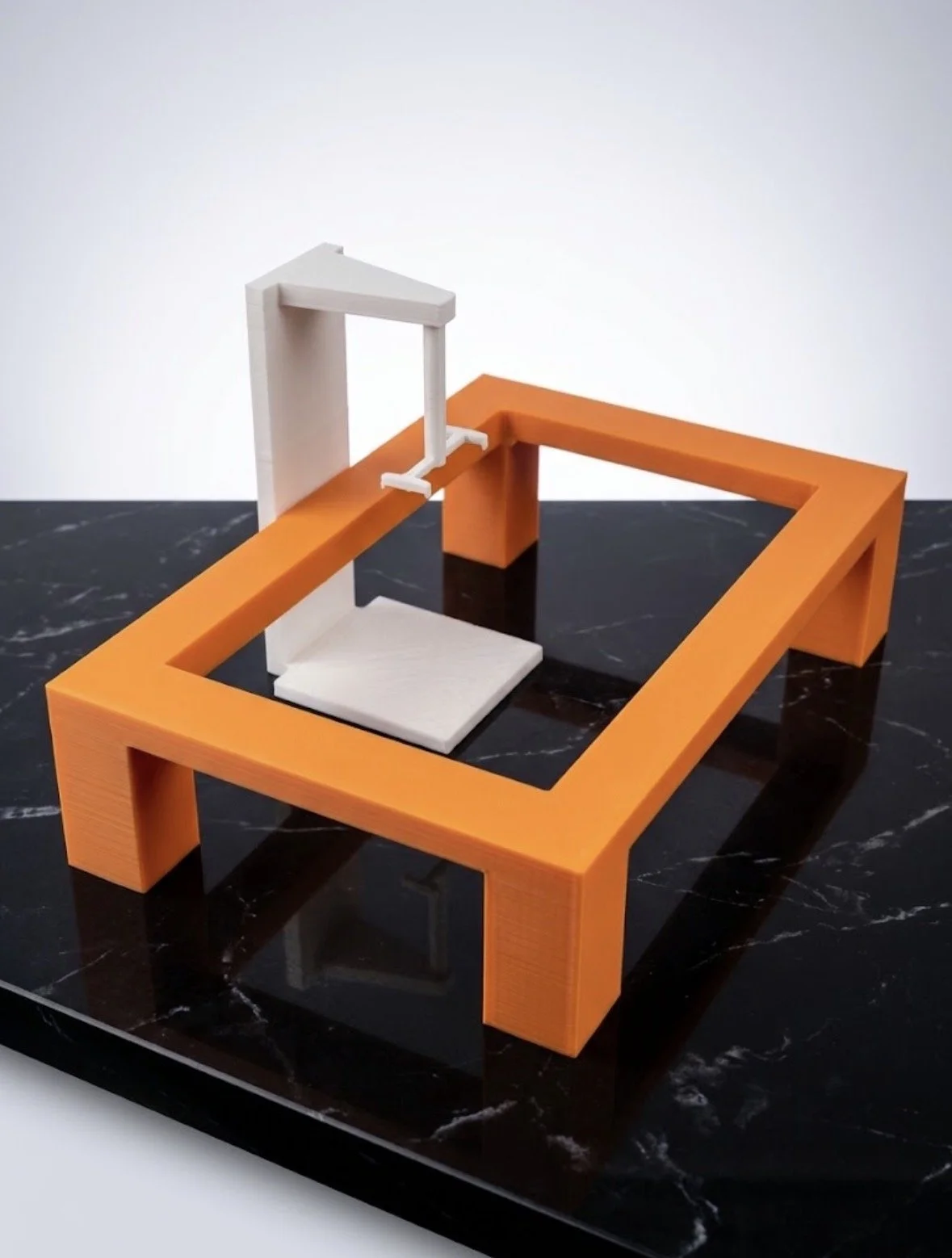
Comes with the Tray and Stand. Manufacturing time: 1-2 Weeks.
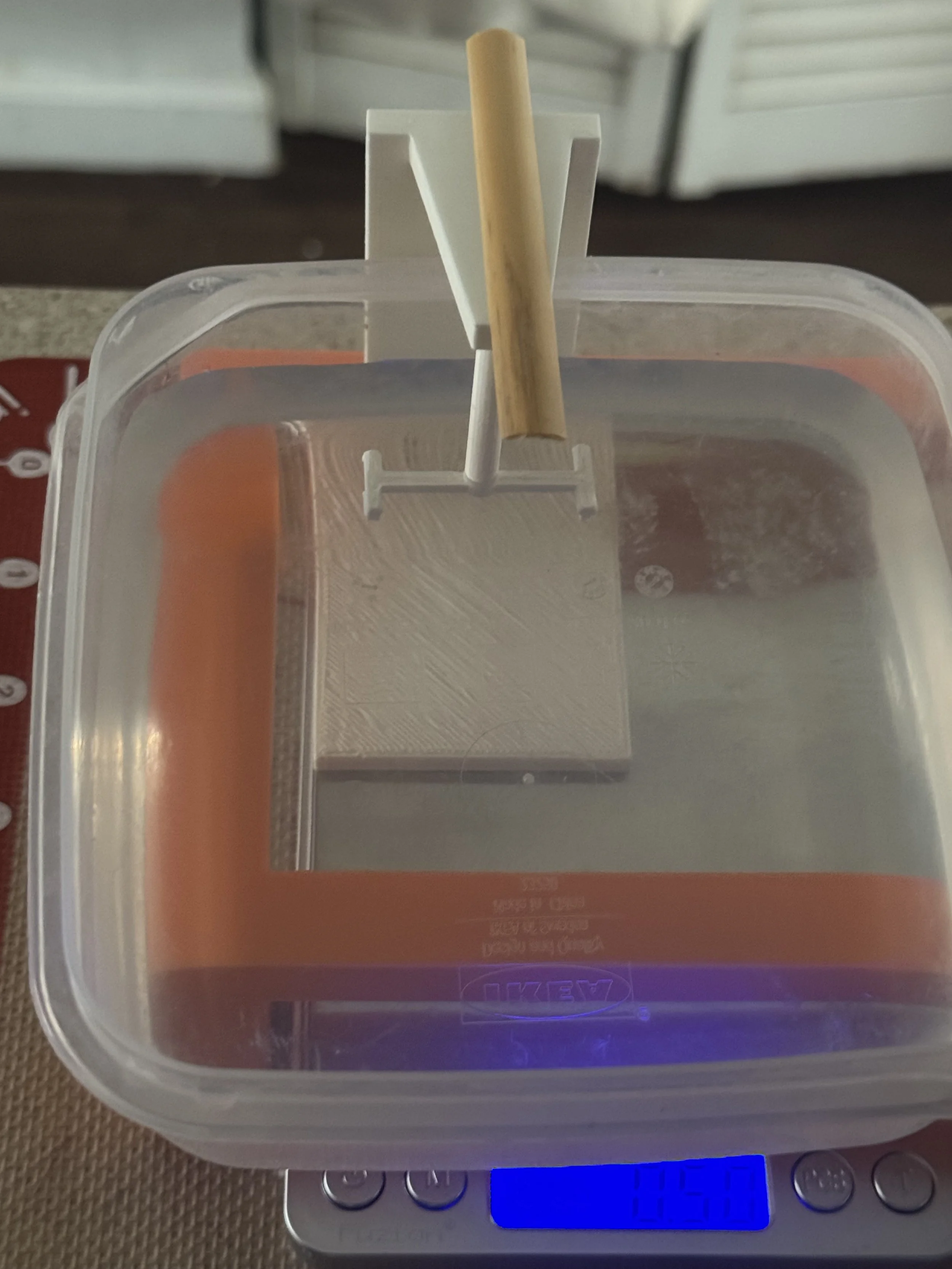
What you need for Complete Setup: .00 Gram Scale (Amazon), Water Container, Tweezers
If you’d like to 3D print this out yourself, contact me for the .stl Files. RobertDiazOboe@gmail.com
Comes with Tray and Stand
What you need to complete setup:
Small .00 Gram Scale (Amazon $12-15)
Water Container
Tweezers (To gently place the cane underwater)
Get Started
https://docs.google.com/spreadsheets/d/1yilmnyfLtaIz4M4R2eEtle7OIwYkZiqcORA-lnfXA6Q/edit?usp=sharing
Click File and make your own copy of the Google Sheet, and begin recording your cane.
Why Test Cane Density?
Cane density influences how a reed vibrates and contributes to the way the reed feels and responds. Density and hardness do not always correlate, so measuring both can provide a more complete picture of the cane. By tracking density and reed performance over time, you can identify the density range that works best for you and increase your yield of successful reeds.
This free calculator is designed to work with a cane density tester using the dry-mass and underwater-weight method.
The calculator will automatically determine the density of your cane and classify it as Low, Medium, High, or Very High.
How to Use the Density Tester
1. Weigh the dry cane
Weigh the cane using an accurate digital scale (.01) and record the dry mass in grams.
For example:
Dry mass: 0.50g (Hard to read in photo)
Enter this number in the Dry Mass (g) column of the calculator.
3. Take the underwater measurement
Submerge the cane in water using your density tester and record the underwater reading according to the tester's instructions.
For example:
Underwater reading: -0.10 g - Enter it as a positive number!
Enter this number in the Underwater Reading (g) column.
4. Let the sheets do the math
The formula is embedded and will automatically calculate the density and provide
the range for you once you hit enter.
Density = Dry Mass ÷ (Dry Mass + Underwater Reading) × 100
For example:
0.50 ÷ (0.50 + 0.10) × 100 = 83.3
This particular piece of cane is very high-density. I wouldn’t use this piece unless
I was in a high altitude environment.
Density Ranges:
The following ranges are based on density values reported by OboeShop.de
Density Classification-
Below 55= Low 55–62= Medium 63–72=High 73+=Very High
These ranges are provided as a general reference. I like to go by the ranges instead of the exact number because of fluctuations in the water, air bubbles or any factors that can possibly interfere with the reading.